
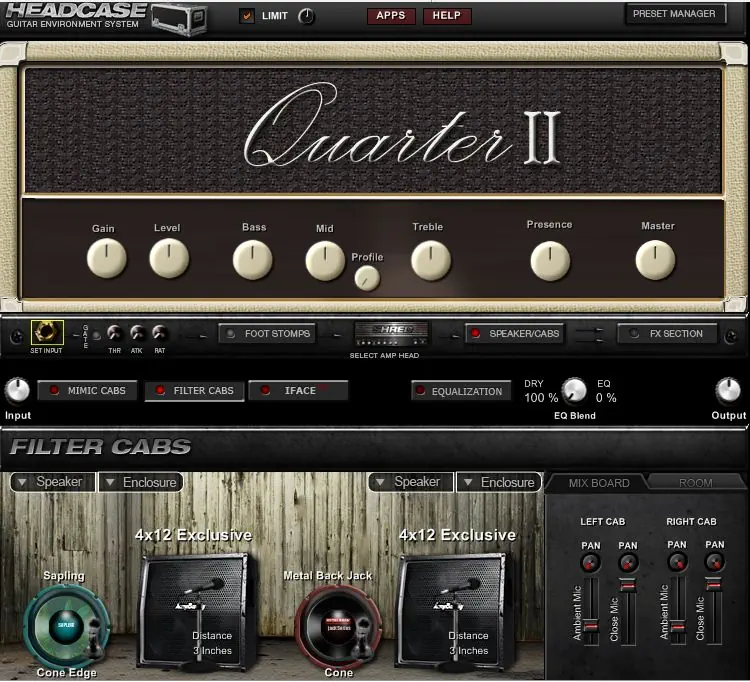
What is Head Case?
Head Case is an amp simulation plugin. It’s essentially an all-in-one tool for musicians and home producers who want a responsive, believable guitar tone in-the-box — one that naturally compresses and distorts based on how hard they play, giving a more organic feel compared to static amp simulations.
Key Features:
- Dynamic response: The plugin reacts to your playing dynamics – when you play louder, it adds more distortion; when you play softer, it produces less distortion
- Sound character: Described as “rugged,” “solid,” and “robust” – reviewers note it’s not trying to emulate a specific real-world amp but has its own strong character
- Curve Designer: Includes a tool for shaping the plugin’s response curve
- Standard installation utilities (Install Head, Uninstall)
Introduction:
Canada’s innovative brainchild, AcmeBarGig, have recently released the highly-anticipated Head Case into the wild. Head Case is the embodied culmination succeeding three years of deep-level programming, intense research & development, and exhaustive beta testing.
Head Case exists alone in its peculiar nebula. It unanimously has dominion of the sphere it occupies. There isn’t another for it to be aptly compared to, because although there are certainly other amp sims, this one is . . .different.
How do you spell ‘unique’? H-E-A-D C-A-S-E!

“You’re traveling to another dimension, a dimension not only of sight and sound, but of aural creativity; a journey into a nebula of wondrous amplifier simulation whose boundaries are that of imagination only. Your next stop…the Tone Stack Zone.“
The $60 sign post is just ahead. Cast off your timidity and join me; if you dare.
How is Head Case different?
AcmeBarGig’s co-founder/lead developer, Ken McLaren, and the ABG team, are constantly evolving Head Case into a more dynamic software-apparatus; spearheading it as a future-proof product. You will realize very quickly, that this amp sim was created to open regions of tone exploration that had never been exposed in such manner or depth, by any amp sim before.
Head Case is not simply a guitar amp simulation suite; it’s a venerable nucleus for a group of ardent followers that more closely resemble a ‘culture’ than a simple user-base.
Most nearly every known amp sim provides ‘modelled’ amps. A modern, quality amp sim furnishes a user with control over:
- Choice of various modelled amp types.
- Cabinet/speaker types.
- Mic types.
- Mic placement.
- Effects/Stomp box selection and effects parameters.
- Various virtual rooms (including size, surface, shape and mix/dry ratio).
Most nearly all modern amp sims feature a degree of control (some more than others) over ‘variac’, ‘sag’, ‘output tube type’, and the like.
Head Case gives a user all of this plus much more. By this reviewer’s consideration, Head Case is THE ONLY amp sim suite that provides a means of building a custom configuration.
We aren’t talking about configuring presets only (although that is included), but rather, the deepest level of user-control over gain structuring, tone stack configuration, component blending, and et cetera.
Hi, you! If you like these kinds of reviews,
be sure to subscribe.
Head Case is truly one of those products that must be experienced, to be understood.
On The Face of It:
Head Case is housed in a cool, rocker’s, charcoal-colored GUI. This striking, somewhat ominous interface makes good use of contrast. Crisp, anti-aliased light grey labels against dark, textured backgrounds maintains clarity and legibility. Head Case features well-designed parts that approach photo-realism, while remaining slightly artsy.
The interface elements represent physical gear in a 3D-ish perspective; however, they are not purely photo-realistic pictures, such as you would find in many SoftTube and UAD plug-ins. This is not a design flaw by any means. AcmeBarGig needn’t lose any sleep over potential copyright-infringement claims for blatantly cloning famous stompboxes or borrowing established branding. Their designs clearly stand on their own, with original concepts and visuals that pay homage to the genre without crossing legal or ethical lines.
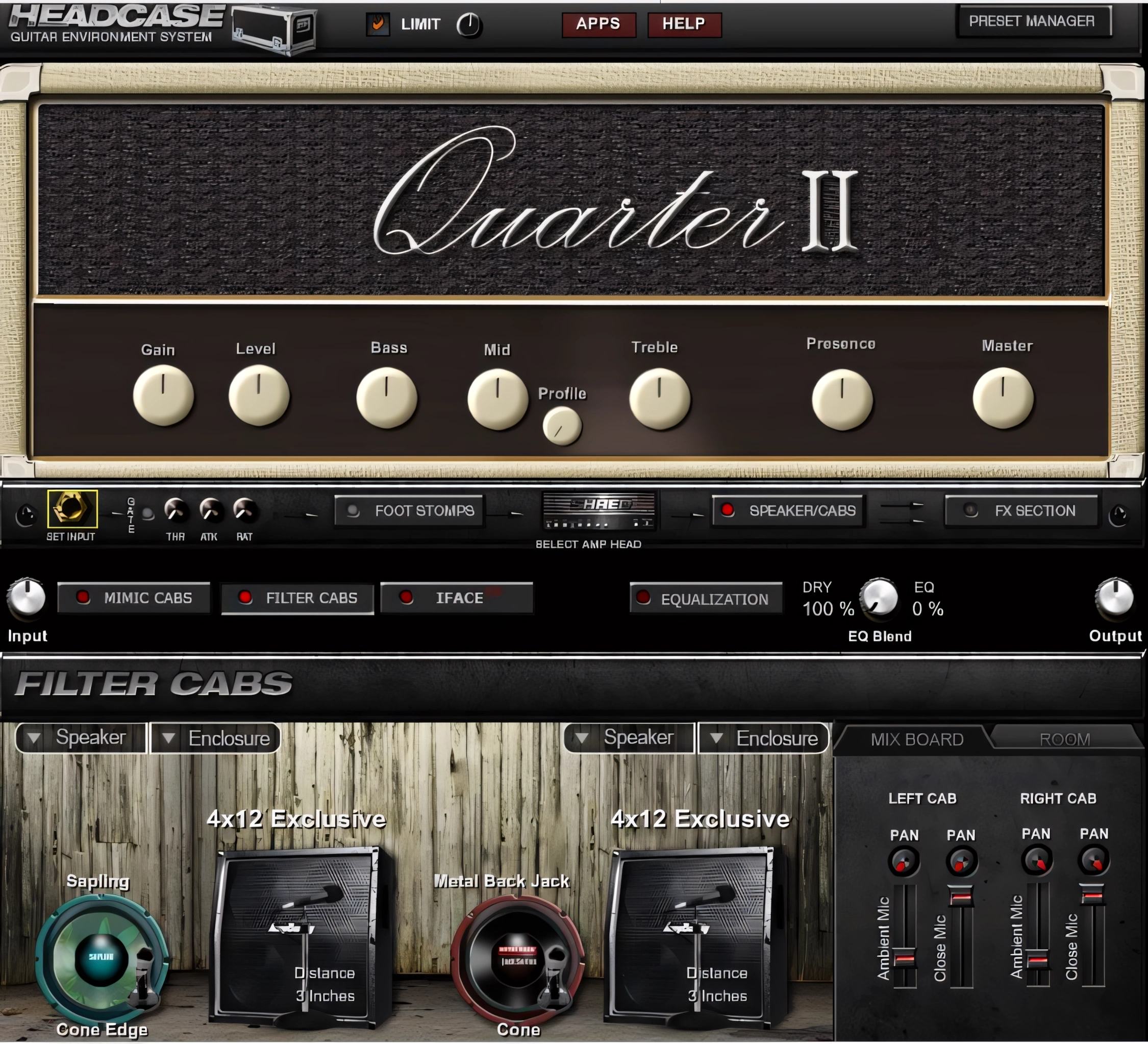
ABG (AcmeBarGig) has cleverly designed the individual components of this excellent virtual amp suite so they’re immediately intuitive to electric guitarists—everything looks and behaves the way a seasoned player expects real hardware to.
The designers craftily implemented smooth lines and subtle curves throughout the entire unit. The varied elements of this GUI incorporate alluring ‘3D ish’ shadowing and lighting effects. In particular, the rack-mount effects and speaker/cab configuration panels are magnetic and inviting.
Spacing:
The sundry bits n’ pieces are all spaced comfortably on each of the plug-in’s four configuration panels. The 3D-like buttons and menus are easily navigated. Shift-click mousing allows smooth, fine incremental/decremental adjustments of each knob and slider.
Much like Guitar Rig or Amplitude, Head Case is a moderately-sized plug-in. It measures 750px wide by 680px high. Most home producer and small studio environments typically employ larger monitors that operate at native resolutions which can easily display this plugin.
The developers of Head Case made very effective use of GUI-screen real estate. However, live-gigging musicians may have a little trouble with it fitting on smaller notebook or netbook screens. Folding, scroll-able panels might be an interface feature that AcmeBarGig could consider for future releases. And too, to keep it future-proof, a resizable UI (+/-) would be advantageous.
The Head Case amp suite intelligently lays out each subsection and element, ensuring everything is well-organized. I found that as a general statement, controls, knobs, and various configuration options, are all located pretty much where one would intuitively expect to find them.
Perhaps a more professional appearance is in order?

The default “MAHAKALI” amp exudes a dark, mysterious vibe, crowned centrally by the Hindu goddess it honors. I remain uncertain whether the glow behind the mesh stems from overheated tubes or hellish embers, since tubes typically emit a gentle orange cast.
One of the other amp heads is named, “Guillotine”. “Shudder”
Engl Powerball, yes; Acme “Guilotine”, no.
Marshall JCM 900, yes; Acme “MAHAKALI”, not so much.
It is this reviewer’s opinion that some of the default graphics are not appropriate images for a professional-grade amp suite. Neither are some of the amp head naming conventions in keeping with a ‘pro’ amp suite plugin.
I’ve been in touch with lead developer, Ken McLaren, about this and he agrees with my findings. He has hinted that future Head Case releases will feature a neutral skin for the default startup amp.
Head Installer:
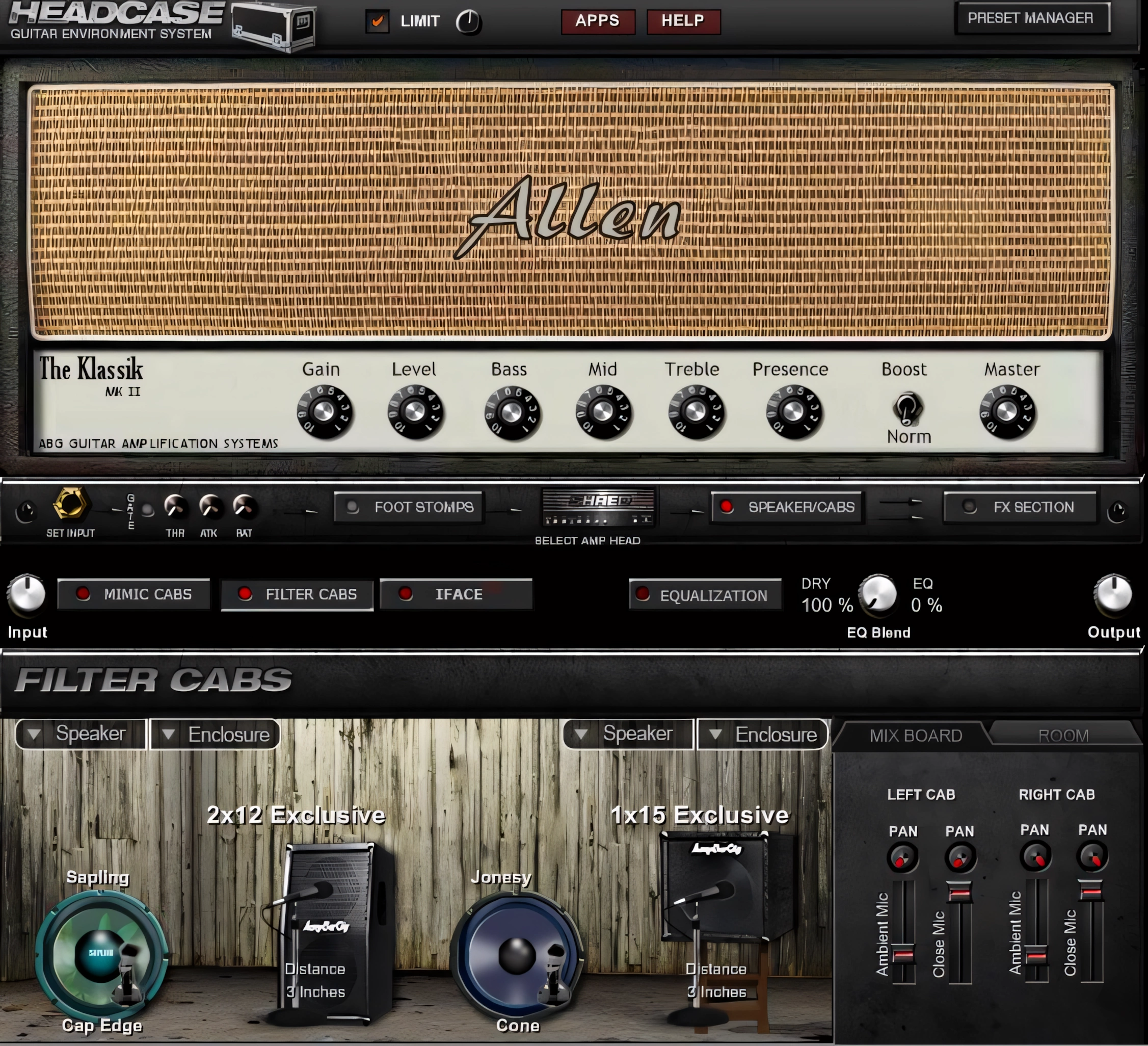
One of the unique attributes that Head Case inventively demonstrates, is its easy-to-use “Head Installer”. Users can quickly export customized amp builds, complete with all their gain staging, tone stack settings, and amp skins. It’s also worth noting that Head Case includes a generous library of knob, button, and switch graphics, giving you plenty of visual options when designing and personalizing your virtual rigs.
** These graphics are found in the “Head Case Assets” sub directory; under the Head Case directory contained in your VST folder.
I downloaded some classic, traditional-looking amp skins from ampskindesigns.com. Next, I opened up the “Old Fella” head in Head Case Builder, and replaced the amp skin as well as the the knobs n’ switches. Finally, I adjusted the gain-staging and the tone stack to my personal taste.
Finally, I exported the ‘tweaked’ amp build (pictured at the left). I did all of this easily and quickly. I now have an amp head that ‘looks’ professional and sounds just as nice as it looks (for my tastes).
Some folks might like the less realistic design of some of the amp heads; however, there are a great many guitarists and self-starting producers who prefer amp sims that look like physical gear. Amp plugs don’t necessarily need to always display photo-realistic copies of Fender Twins or Marshal JCM’s, just . . well, ‘real’ looking gear.
Head Case is very unique in its concept and dynamic schematic. This reviewer believes that Head Case could gain wider acceptance as a professional-grade product if the team implements some graphics changes and minor tweaks.
Visuals Part Deux:
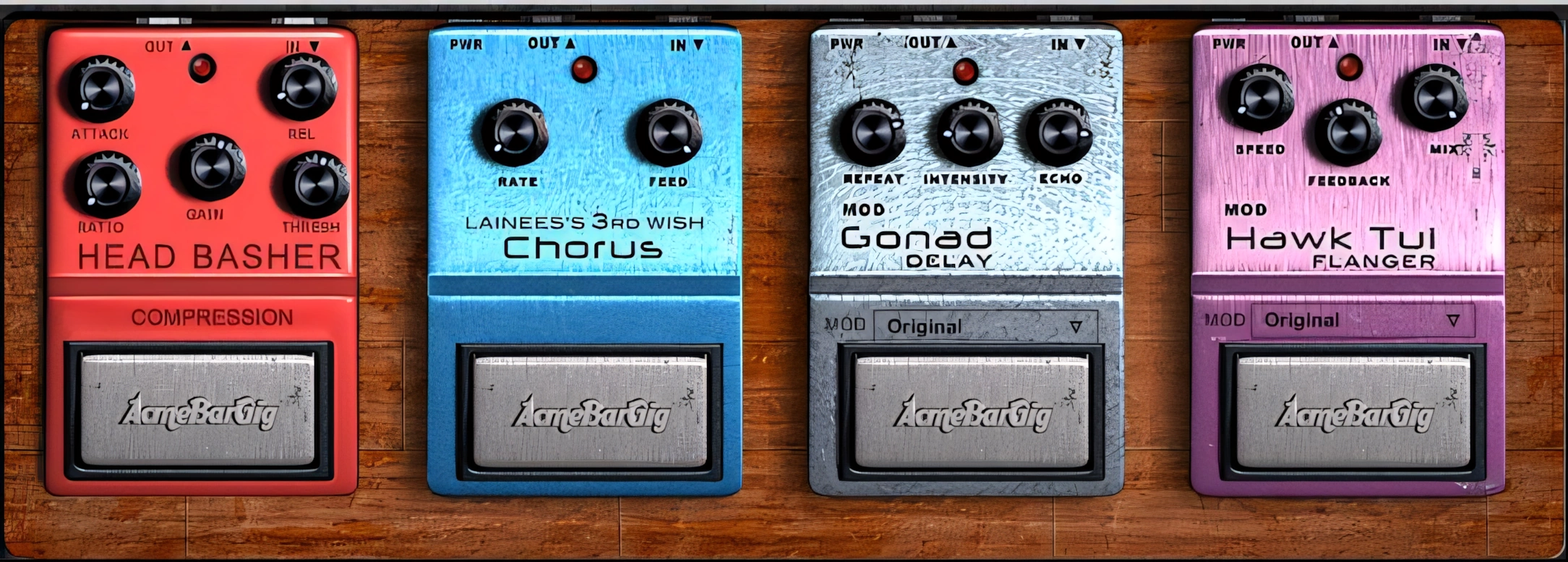
FOOT STOMPS Panel: Dressy, emulated effects pedals in subdued, pastel-like colors sit neatly on virtual parquet tiled flooring. Note I said ‘pastel-like’; not pastel. There’s nuthin’ girlie looking here! The colors are kool and road-worthy – not wimpy. There is space allocation for up to (4) stomps at a time.
If I had to describe an actual brand-style, I’d say these look like a Jeff Goldblum “The Fly” teleportation mix of late 70s DOD and Ibanez stomp boxes.
SPEAKER/CABS Panel:
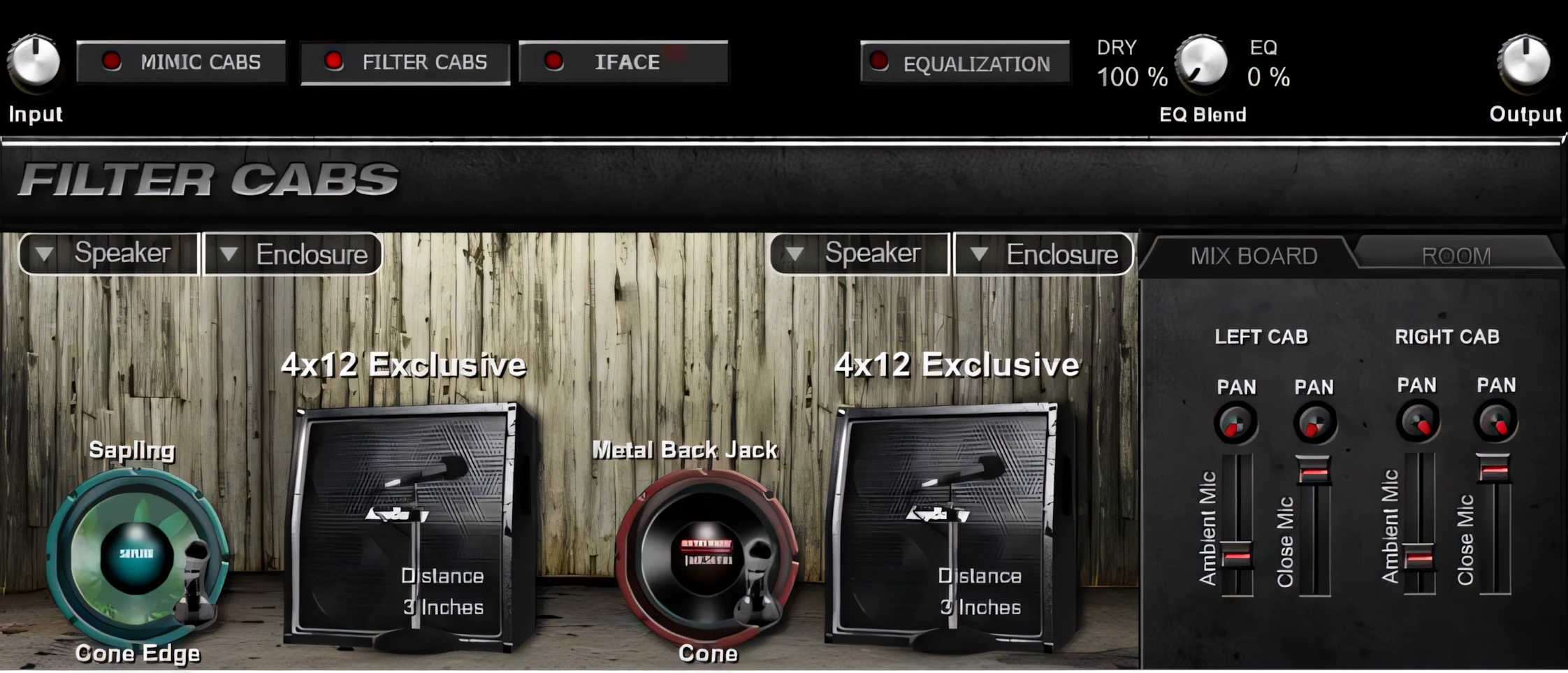
Dude! The moment the interface appears, your eyes lock onto a set of aggressive-looking speaker cabinets that practically scream volume and power. A pair of ultra-cool cabs sit at a slightly off-axis 3D angle, instantly giving the plug-in a bold, stage-ready attitude. I’d guesstimate it be about a 20 degree angle. You have the choice of three cabinet/speaker configuration modules here.
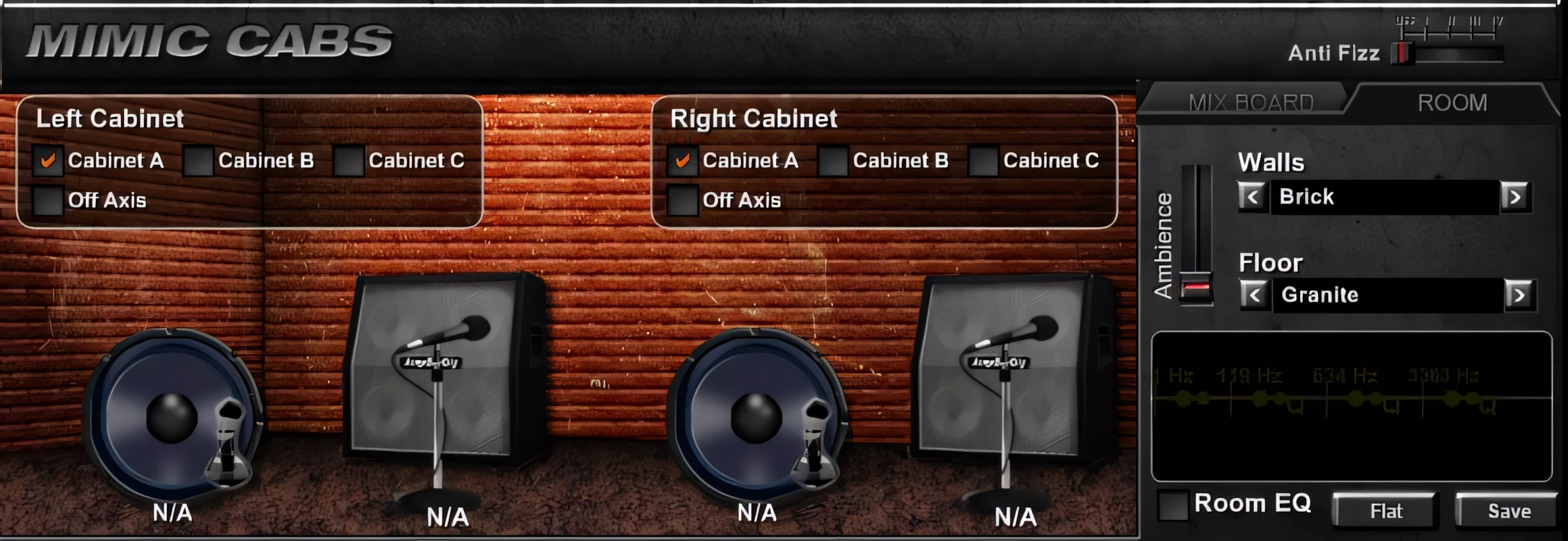
The MIMIC and FILTER CABS modules offer up a good selection of wall and flooring materials; ranging from ceramic, stone, woods, etcetera. The textured graphics convincingly emulate each room’s material selection, reminding onlookers of visuals found in many console video games.
Granting a user an even greater degree of control, the ‘FILTER CABS’ sub section allows for more specific cabinet selection and speaker configuration options via drop-down menus. The speakers lack “Greenback” or “Vintage 30” labels, yet most electric guitarists can still discern the inferred models.
In this screen, the user can manipulate the microphone placement and distance. You can position the mic to aim at the cap, cap edge, cone, or cone’s edge. You can distance the mic from 0 to 6 inches, or 1 foot away from the cabinet.
At the most minimal, the ‘MIMIC CABS’ sub section provides (3) cabinet types; A, B, and C respectively. There is also an ‘off-axis’ check box. The interface does not visually indicate which cabinets these are emulations of.
FX SECTION Panel:
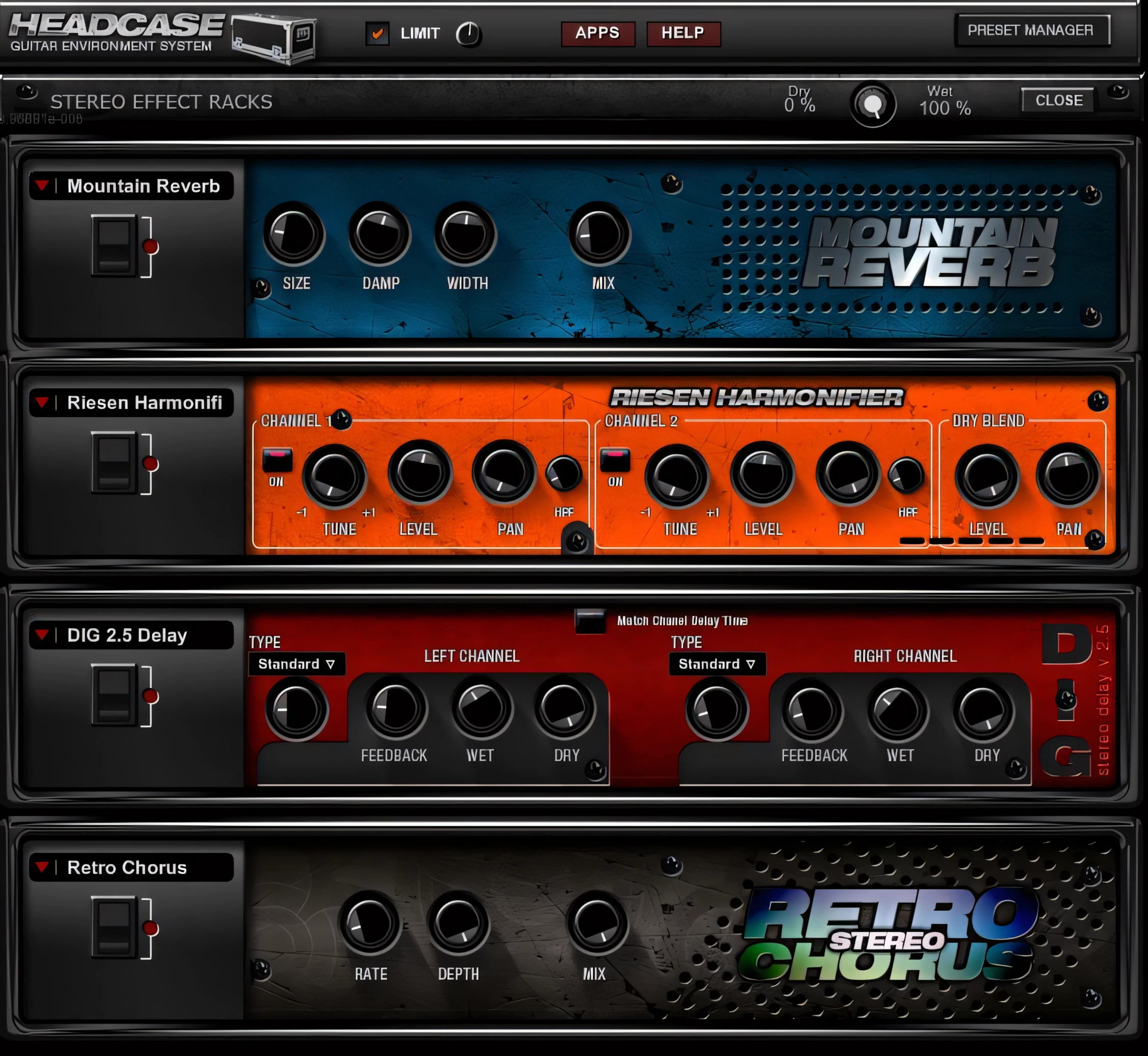
This section of the amp suite effectively utilizes the full amount of screen real estate available in Head Case. There are seven ‘rack mount’ effects to choose from. In contrast to the subdued, pastel-like FOOT STOMP section, these elements feature riveting, vibrant colors. As with the rest of Head Case’s interface, we have gads of texture and shadowing going on.
Yet, as bold as the colors are, they retain a visual warmth, in keeping with this GUI’s generally darker hue. As with the FOOT STOMPs, there are four rack slots available. Users can easily swap effects with a simple mouse click on the large, readable drop-down menu on the left of each rack slot.
Each of these effects delivers great sound quality and functionality. We’ll go into more detail about the individual effects a little later on.
IFACE:
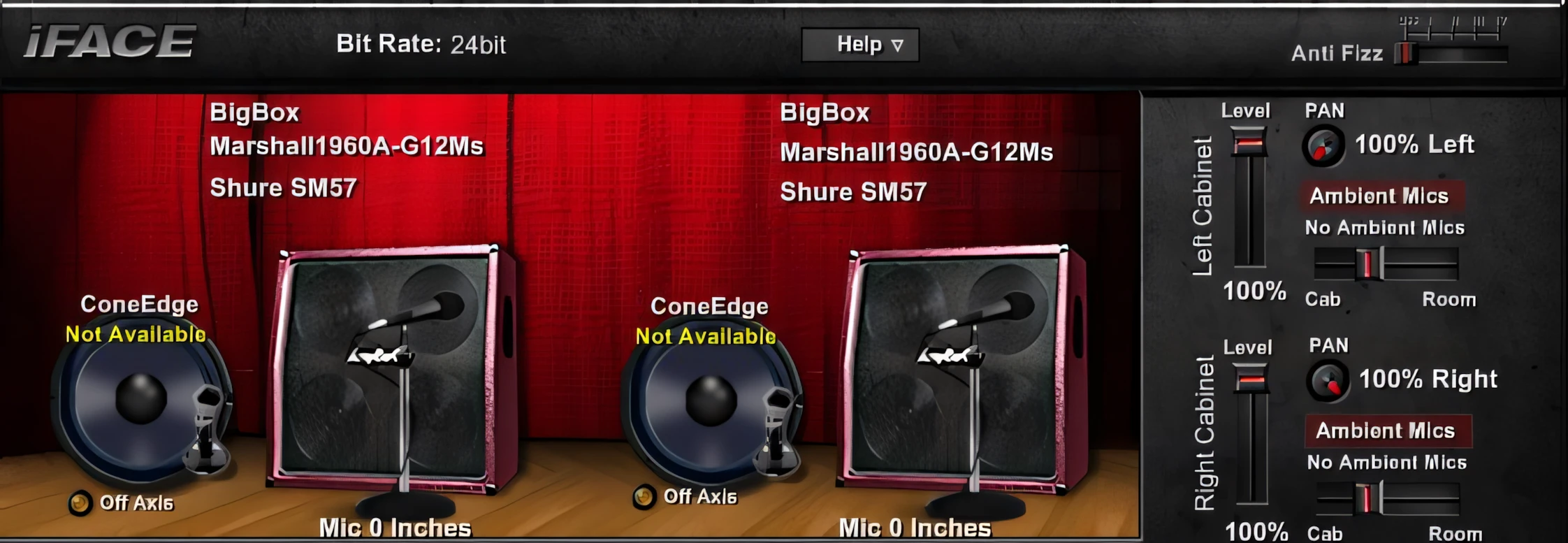
Created specifically for the astounding commercial RedWirez impulse response library, ABG’s IFACE™ application facilitates unsurpassed cabinet/speaker emulation quality. The same mic distance and placement options are available to the user. IFACE™ makes IR selection very easy.
Simply assign the folder path of your RedWirez IR library within IFACE™. The user can quickly and easily browse their RedWirez IR library. Vibrant red curtains against the wall and sleek hardwood flooring immediately identify this subsection. Classy. Very classy.
** NOTE: IFACE™ is available as a stand-alone application. It used to list on the AcmeBarGig web site for $21.
Sound Quality:
Rugged. Solid. Robust and Strong. Head Case is NOT a ‘wannabe’. This unit fits perfectly and powers through rocking live sessions with the endurance of a 21-year-old Angus Young. Swap out any of the high gain or crunch amps with the smooth, clean tones pleasingly produced by “Old Fella”, or the pristine, round, Bassman-like quality of “Quarter II”.
The full array of effects, both stomp-boxed and rack mounted, produce great quality results. Each of the FX units is highly configurable and very usable. Each effect’s parameter changes are dynamic; each one has a wide range of control.
Remember when you were a kid and you got your first budget amp or effects pedal? The component would make noise, but frequently the potentiometers on those old gadgets were anything but smooth. On a lot of those old cheapie boxes, the pots seemed to have only two settings – nuthin’ or too much!
You won’t have to cope with abrupt changes, or erratic alterations with any of this amp suite’s effects. The AcmeBarGig programmers have added a nice sprinkle of magic dust to ensure that all the knobs rotate fluidly.
Stereo Imaging and Depth Perception:
Head Case emphasizes wide, well–dispersed stereo amplification. A producer or engineer can set up this prolific amp suite to output a dizzying amount of enthralling guitar-driven stereo soundscapes. Combinations of speaker/cab configurations, stereo modulation and delay effects, and complete panning control, collectively provide a plethora of interesting stereo expression.
Needless to say, Head Case functions very effectively as a typical single channel or as a straight up mono amplifier.
There are more dimensions of Head Case to investigate. Join me. We’ll enter through a second portal of the Tone Stack Zone: Part 2 of The Head Case Big Review.

Leave a Reply