
What are the SPL Microplugs?
SPL MoVerb, DeVerb, and Attacker Plus are transient-shaping plugins from Sound Performance Lab (SPL) as part of their Microplug series. They are distributed through Plugin Alliance. In this deep-dive SPL Attacker, DeVerb and MoVerb microplugs review, we’ll dissect each one to see how they can benefit your productions. In brief, here’s what each one does:
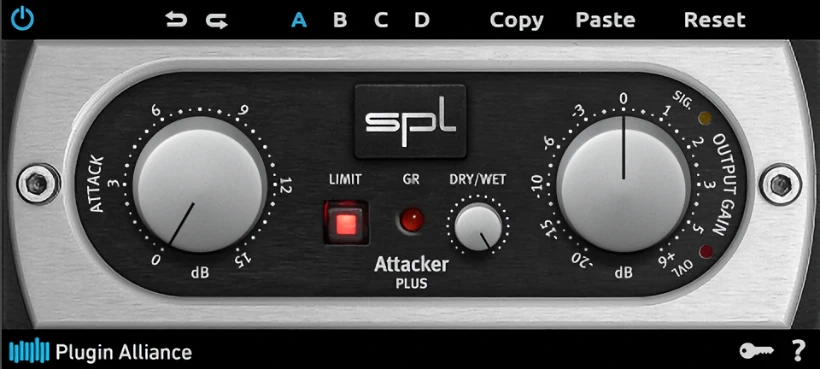
- Attacker Plus – A transient shaper that amplifies the attack portion of audio signals. It delivers envelope shaping similar to SPL’s original Transient Designer hardware, giving you tighter punch and more percussive impact on drums, bass, guitars, and other instruments.
- DeVerb Plus – Uses SPL’s Transient Designer processing to remove unwanted room tone or reverb from tracks. Instead of traditional noise gates with fixed release times, it shortens decay periods musically—making it useful for cleaning up vocal recordings or removing ambience from otherwise dry mixes.
- MoVerb Plus – Adds a single-knob decay boost with a soft-peak limiter. This extends sustain or creates subtle reverb-like effects by drawing out and boosting the decay of sounds. Simple interface, but flexible enough for adding space without complex reverb controls.
Introduction:
These “microplugins” are essentially simplified, streamlined versions designed for quick workflow. They focus on doing one thing well rather than offering dozens of parameters. All three use SPL’s proprietary transient-shaping technology, originally developed in their enviable outboard gear.
For about 25 years, SPL’s Transient Designer and its practical little MicroPlug cousins have earned the admiration of countless audio engineers. As a result, Transient Designer has become the de facto standard against which nearly every other transient-shaping dynamics tool is measured. That’s no small feat in an industry that rarely agrees on anything.
I will skip the pointless rhetoric and common knowledge. Instead, let’s focus on what matters. SPL’s original hardware units and their precisely modeled plugin counterparts don’t just raise the bar. Quite simply, they are the bar.
Each Microplug demands a respectable chunk of change from your piggy bank as a first-time purchase. Attacker Plus comes in at $99 (USD), with Mo-Verb and De-Verb following closely at $79 each.
If you already own licenses for the original versions and you are hoping for tempting upgrade pricing, Plugin Alliance steps up. They cut those amounts in half for you, so your wallet can breathe a little easier.
New versions. So What? What’s the big deal?
So you might be thinking to yourself: “Yawn . . . same ol’, same ol’. What’s the big deal?”
- The big deal, my friends, is that this upgrade is bigger and better in a few crucial ways.
- The GUIs are now approximately 30% larger.
- The dynamics algorithms have been refined.
- Parallel processing courtesy of ‘Wet/Dry’ knobs.
- Soft limiting is available on the final output stage.
Why is Transient shaping Important?
SPL Transient Shaper owes its remarkable success to one game-changing innovation: “Differential Envelope Technology.” This breakthrough technology revolutionized how the recording industry shapes dynamics. What makes it so compelling? The approach fundamentally changes the game for audio professionals.
Until now, you couldn’t surgically reshape the envelope of audio transients and percussion with such pinpoint accuracy. Sure, an “1176” or “DBX 160” adds that delightful snap, crackle, and pop to a drum track, but they also drag along unwanted tonal baggage. With this new precision, you get the punch without the collateral damage—no more boosting the whole kit just to fix one snare hit!
SPL’s transient shaping works entirely within the envelope domain rather than by adjusting audio volume.
As a result, it remains a level-independent process. You can shape a sound’s attack and sustain characteristics regardless of its volume level. Better yet, you won’t need to fiddle with threshold, attack, or release controls.
Hi, you! If you like these kinds of reviews,
be sure to subscribe.
Installation and Authorization:
After completing the purchase, customers can immediately download the plug-in installers from their account on the Plugin Alliance website. Each Microplug installer is approximately 24 MB. However, don’t let the modest file size fool you. Every installer includes AAX, VST3, and standard VST formats. You can also evaluate each plug-in with a fully functional 14-day trial before making your final decision.
Online activation takes just a few seconds using a simple challenge/response system. Alternatively, you can easily activate the software offline. Each license permits three concurrent activations across separate computers.
Even better, you can transform any standard USB thumb drive or SD card into a portable dongle. This feature is a lifesaver for traveling engineers. Essentially, it mimics an eLicenser or iLok dongle, giving you effortless mobile product activation on the go.
Visual Design:
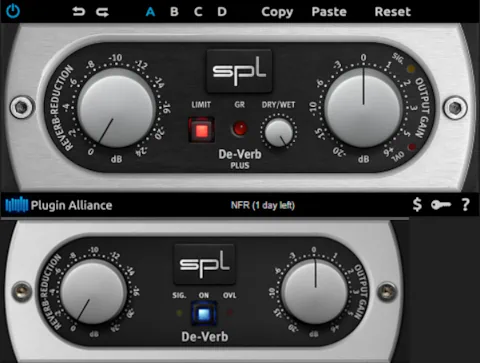
The good news: SPL’s Microplugs PLus are approximately 30 percent larger than their predecessors.
The bad news: These plug-ins do not offer resizable or scalable interfaces, so you may still find them tiny on ultra high-definition screens. The plugins’ screen-estate is still only 480 pixels wide, so they remain diminutive on 1080p and UHD monitors. In practical terms, however, they remain so simple to use that they do not need much screen space.
Even so, I strongly urge the SPL developers to implement scalable, or at least resizable, GUIs. Your eyes will thank them, especially after a long mixing session.
The first things that draw our attention on the Microplugs are the two large rotary knobs on either side. In the center of the interface, we see the Limiter button, the Gain Reduction indicator, and the Dry/Wet knob.
Along the top, the plug-ins provide Undo and Redo buttons, four preset snapshot slots, and handy Copy, Paste, and Reset buttons. Everything you need sits right where you would expect it—no treasure map required.
The redesign maintains visual kinship with its predecessors—but with noticeably roomier controls and larger, more readable text. This matters because generous spacing invites interaction rather than intimidating users.
The design team then elevates the experience through clever use of 3D-ish, photo-realistic graphics. These visuals create an attractive, inviting aesthetic that actually makes sense. The GUIs communicate naturalism effortlessly. They whisper “ease-of-use” through every element. Most importantly, users discover that tweaking parameters feels intuitive and stress-free—no manual required.
Performance and Functionality:
You won’t find clutter here, and honestly, that’s a fantastic thing. Simplicity and convenience take center stage, making Attacker Plus, De-Verb Plus, and Mo-Verb Plus perfect matches for both needs. Each plug-in targets a specific corner of the transient-shaping spectrum with laser focus. In fact, you only have to worry about one dial—the rest just tag along for the ride!
On “Attacker Plus,” the star of the show is the ‘Attack’ knob. The spotlight shifts to the ‘Reverb Reduction’ dial on “De-Verb Plus,” while “Mo-Verb Plus” lets ‘Reverb Enhancement’ lead the charge. It’s like giving your mix a VIP pass without forcing it to buy a whole ticket package!
Here is a brief overview of what each of the three Microplugs does:
Attacker Plus: First, it amplifies and enhances the initial attack of any percussive or tonal input. It focuses strictly on that first transient, nothing beyond it.
As a result, it adds noticeable punch and excitement to drum or instrument tracks. The sound immediately feels more alive and forward in the mix.
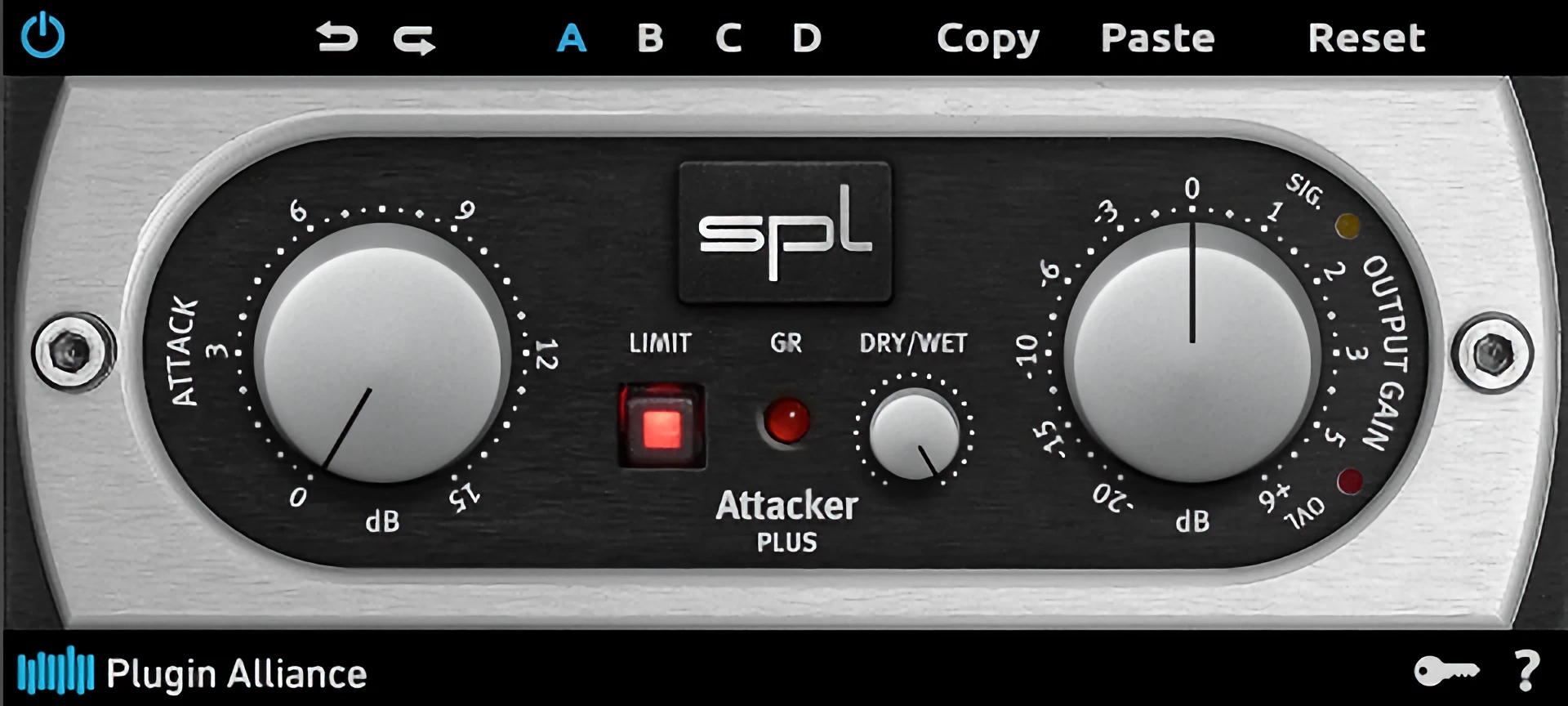
If a source feels flat or lifeless, “Attacker Plus” fixes that quickly. It injects energy and impact, almost like giving the sound a caffeine shot—just without the jitters.
De-Verb Plus: Subdue ringing elements instantly. To do this, lessen the body or sustain of sonic attributes that swamp their initial wallop.
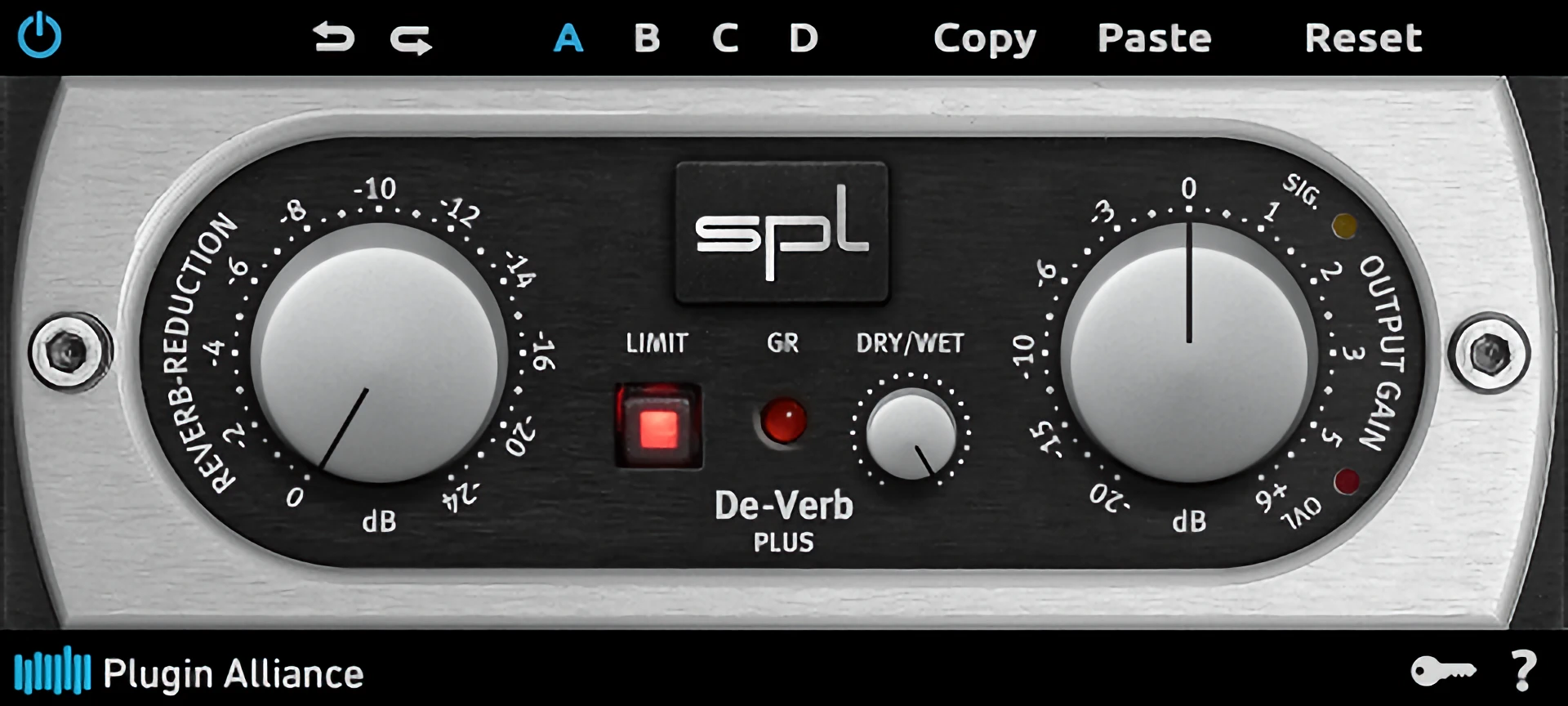
Are you struggling to eliminate the ringing from a stubborn snare track? Look no further. De-Verb Plus is exactly the pony you’re looking for. In fact, this Microplug excels at reducing lingering overtones. It easily tames exaggerated room ambience, rescuing an otherwise excellent recording from sonic chaos.
Mo-Verb Plus: This one does exactly the opposite of De-Verb. Perhaps you struggle to bring out the swish of those snare wires. Or maybe you want the kick drum’s decay to sound longer and boomier.
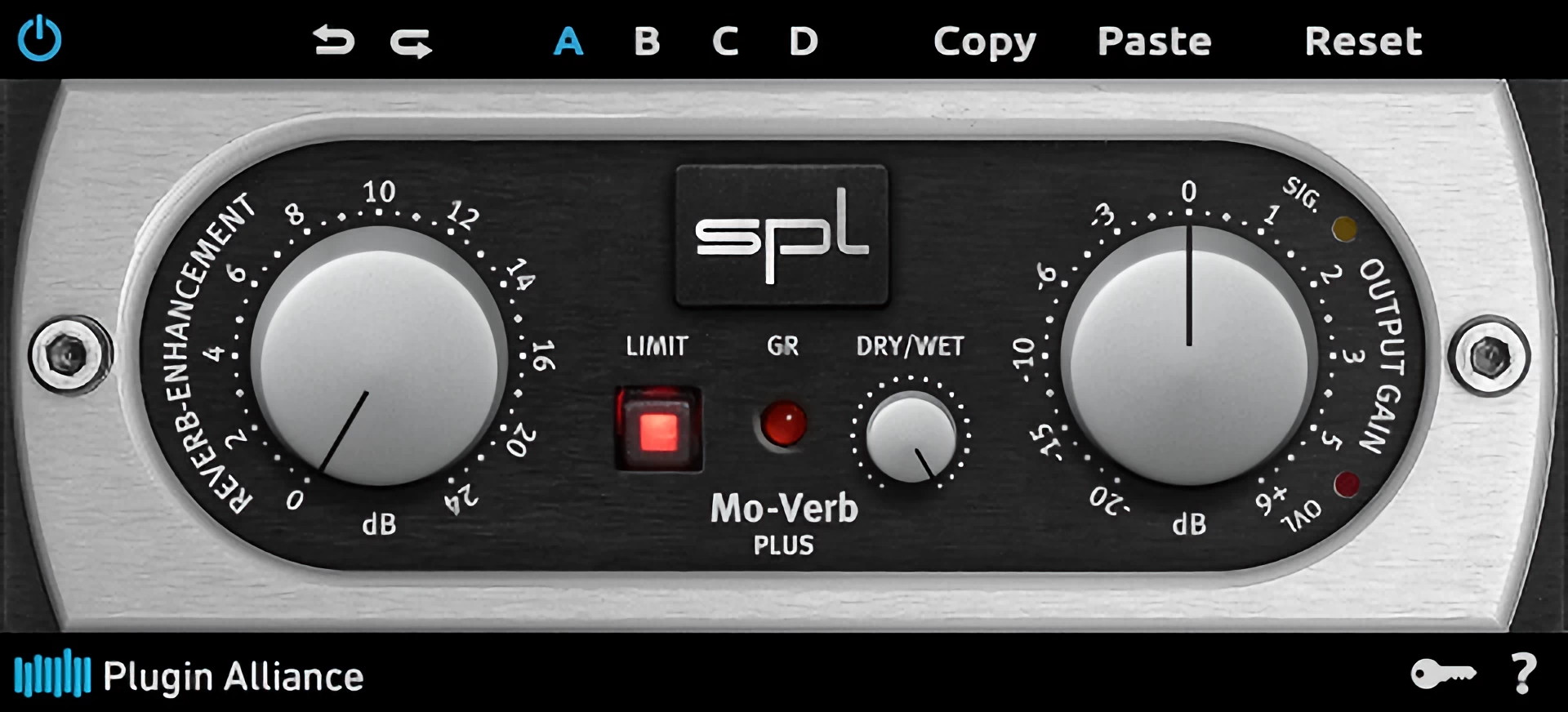
If you want to naturally emphasize the ambient bloom of a dampened room, this plug-in delivers exactly what you need. Mo-Verb Plus makes it ridiculously simple to exaggerate and enhance the sustain and weight of any percussive or musical source. It is like giving your sounds an extra cup of coffee, without the jitters.
Some things in common . .
Each Microplug features a prominent ‘Output Gain’ knob on the right side. This knob earns its real estate in two common scenarios: when hot input signals arrive at your door, or when you crank up the ‘Attack’ parameter.
Here’s the clever bit: these processors shape envelopes rather than respond to volume levels. This means they perform their magic consistently—regardless of whether your input signal whispers or screams. So naturally, SPL added a wonderful companion feature: built-in soft peak limiting. This obliging tool works tirelessly behind the scenes, preventing over-shoots and clipping before they even threaten your mix.
Did you sneeze, fumble a knob, or just hit the wrong button? No panic!
Convenient ‘Undo’ and ‘Redo’ buttons let you instantly rewind to safety. Want to compare tweaks on the fly? Snap up to four temporary presets into those handy ‘A-B-C-D’ slots with a single click. Need to clone your perfect settings elsewhere? Just copy and paste in a heartbeat. Finally, if things go off the rails, hit ‘Reset’ to bounce back to factory defaults faster than you can say, “oops!”
Sound Quality:
SPL’s Microplugs deliver professional-grade performance from the company that pioneered transient shaping technology. They sound outstanding and perform exceptionally well.
Less is More . .
That said, use a light touch when adjusting the controls. A little really does go a long way. In my experience, settings beyond the 2 o’clock position tend to produce less desirable results, especially with the Attack, Reverb Enhancement, and Reverb Reduction controls.
By contrast, settings between 7 and 12 o’clock consistently sound balanced, transparent, and natural. They enhance the source without changing its character.
Parallel Lines . .
On the other hand, exaggerated settings work wonders when paired with the built-in parallel processing feature.
For years, creative engineers used the “All In” mode on 1176 compressors to obliterate audio. Afterward, they blended that aggressive distortion with the unprocessed tracks. This trick inevitably yielded massive, thick-sounding drums.
Naturally, you can apply that exact same principle here. Simply supercharge a snare drum’s attack, then dial in the dry sound. This delivers huge impact while keeping your mix entirely natural.
Good news, Boss! Driving pink noise through them while monitoring a spectrum meter did not reveal any visible aliasing or artifacts.
CPU and Memory Consumption:
These plugins keep CPU consumption remarkably low. In fact, any moderately powered DAW PC built since 2012 can easily run dozens of simultaneous instances.
To test this, I loaded twelve instances of “Attacker Plus” into an empty Studio One 3.5 project. My Core i7 7700HQ laptop barely flinched. Concurrently, the PreSonus performance monitor stayed safely under 20 percent.
4 out of 5 Stars


:: Pros
- Industry-leading triplet of transient shaping goodies.
- Slightly larger interface(s).
- Welcome new appointments to facilitate parallel processing
and soft peak limiting. - Super simple to configure.
- Works as expected, NO finicky surprises.
- Upgrade pricing makes it feasible for previous version license holders.
::Cons
- GUIs really *should be resizable and/or scalable to better suit modern Hi Def resolutions.
- First time buyers might consider Microplugs to be somewhat expensive compared to other (similar) high quality products.
** EAReckon’s “TransReckon” for example.
Visit the Plugin-Alliance website. www.Plugin-Alliance.com
Intellectual Copyright – 2017 – All rights Reserved. This review may not be copied or reproduced in whole, nor in part, without express written permission from the author.

Leave a Reply